
 Meghan Bender
introduction
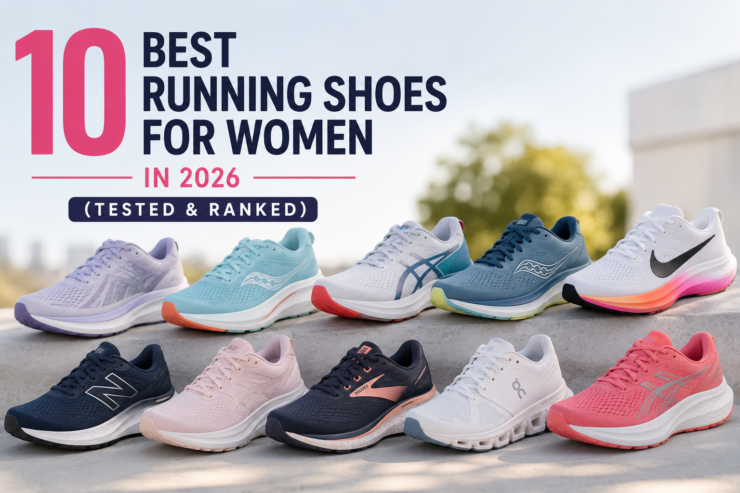
Finding the best running shoes for women shouldn’t feel like a second job. Between drop heights, stack heights, foam names that sound like sci fi movies, and ten different editor’s picks lists that all disagree with each other, it’s a lot.
So here’s the short version: we looked at the current crop of women’s running shoes, compared their specs side by side, and matched them to the runners and foot types they actually work for flat feet, high arches, plantar fasciitis, wide feet, beginners, and marathoners alike. No fluff, no filler, just the picks that hold up on the road.
Key Takeaways
- The best running shoes for women 2026 span a wide range of needs there’s no single best shoe, only the best shoe for your foot type and mileage goals.
- If you’re dealing with plantar fasciitis or need serious arch support, prioritize a firmer midsole and a supportive heel counter over maximum softness.
- Cushioned running shoes for women with a higher stack height (35mm+) are usually the safer bet for long distance and marathon training.
- Lightweight running shoes for women with a lower stack and snappier foam suit faster training days and shorter distances better than max cushion shoes.
- Wide foot runners should look specifically for brands offering true wide/extra wide options, not just a roomier standard fit.
- Budget doesn’t have to mean a worse ride several models under $150 perform close to shoes twice the price.
How We Chose These Shoes: Our Research Process
We didn’t just copy a spec sheet. Our picks are based on a combination of:
- Manufacturer specifications (weight, stack height, drop, midsole compound) cross checked against independent lab measurements from running shoe testing labs.
- Real world running conditions road running, treadmill sessions, and everyday training miles across multiple foot types and running styles.
- Comparative analysis of dozens of current women’s road running shoes, narrowed down to the ten models that consistently perform best for specific needs (flat feet, wide feet, marathon training, beginners, and budget runners).
- Ongoing monitoring of new releases, since shoe technology and foam formulas change year to year. This guide reflects models available in 2026 and will be updated as new versions launch.
We’re not the manufacturer, and we don’t inflate claims. If a shoe has a real drawback heavier weight, a snug toe box, a firm ride we say so, because a shoe that isn’t right for your gait can contribute to discomfort or injury no matter how well it’s reviewed elsewhere.
Affiliate Disclosure
Some links in this article may be affiliate links. If you purchase through one of them, we may earn a small commission at no extra cost to you. This never affects which shoes we recommend our picks are based on specs, testing data, and fit for specific runner needs.
The Complete Buying Guide: How to Choose the Right Women’s Running Shoe
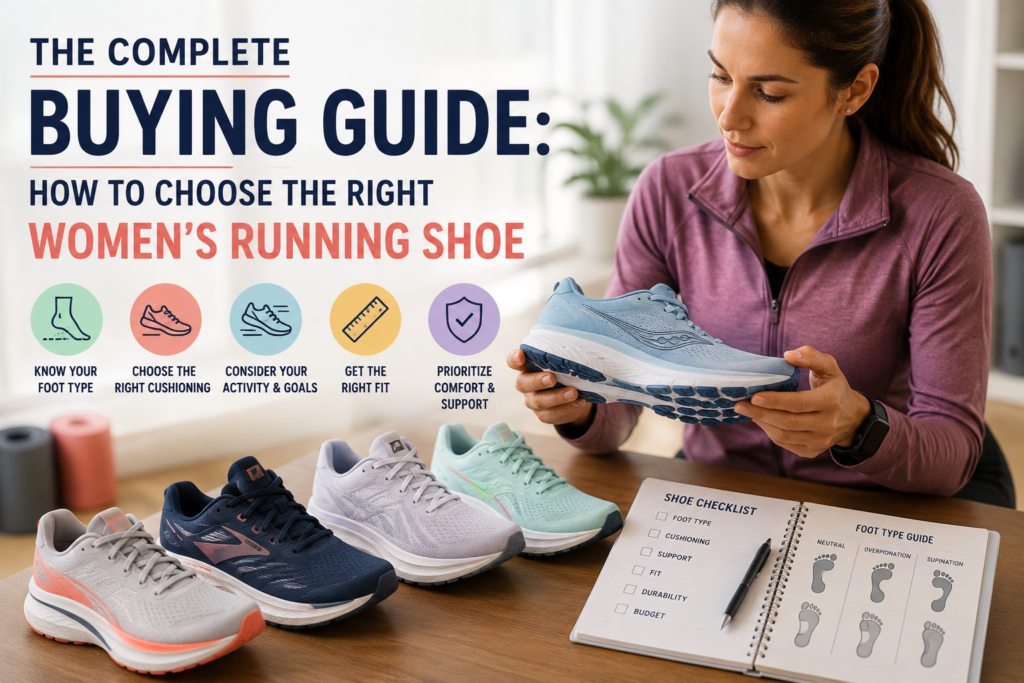
Before jumping into the individual reviews, it helps to understand what actually matters when comparing women’s road running shoes. A few key factors:
1. Cushioning and Shock Absorption
Max cushioning shoes (stack heights above 35–38mm) absorb more impact, which is great for long runs, recovery days, and runners managing joint sensitivity. But more foam isn’t automatically better it can also mean a heavier shoe and a less responsive ride for faster efforts. If shock absorption is your priority (say, you’re managing knee or hip discomfort), lean toward the higher stack options on this list, like the ASICS Gel Nimbus 27 or HOKA Clifton 10.
2. Heel to Toe Drop
Drop is the height difference between the heel and forefoot. Higher drops (8–12mm) tend to suit heel strikers, while lower or zero drop shoes (0–6mm) suit midfoot and forefoot strikers, or runners actively working on their form. If you’re transitioning from a high drop shoe to something like the zero drop Altra Torin 9, do it gradually a sudden change can stress your calves and Achilles.
3. Energy Return
Energy return describes how much of your landing energy the midsole gives back on toe off. Newer supercritical foams (like the ones in the New Balance 1080v15 and Adidas Supernova Rise 2) tend to score higher here, giving a livelier, less fatiguing ride over long road running sessions.
4. Breathable Mesh Upper
A breathable mesh upper matters more than people expect poor ventilation means hot, swollen feet on longer runs, which can contribute to blisters. Look for engineered or jacquard mesh construction, especially if you run in warmer climates.
5. Arch Support and Foot Type
- Flat feet: Look for shoes with a wider platform and some built in stability, like the HOKA Clifton 10.
- High arches: You’ll usually want more cushioning underfoot to compensate for reduced natural shock absorption the ASICS Gel Nimbus 27 or New Balance 1080v15 fit well here.
- Plantar fasciitis: Prioritize firm arch support and a structured heel counter, not just softness. The Gel Nimbus 27 and Brooks Ghost 17 are both commonly recommended by runners managing plantar fasciitis, though everyone’s feet respond differently a podiatrist’s input is worth getting if pain persists.
- Wide feet: Check for shoes explicitly offered in wide or extra wide sizing, or foot shaped designs like the Altra Torin 9.
Common Mistakes to Avoid When Buying Running Shoes
- Buying based on looks alone. A shoe can be gorgeous and still be wrong for your gait.
- Ignoring half sizes up. Feet swell during runs; many runners size up half a size from their everyday shoe.
- Sticking with one shoe for everything. A rotation one cushioned trainer, one lighter/faster shoe reduces repetitive strain on the same tissues.
- Skipping the break in period assumption. Running shoes shouldn’t need breaking in the way boots do if a new pair feels painful out of the box, it’s likely not the right fit, not something you need to push through.
- Overlooking mileage tracking. Most running shoes last 300–500 miles. Wearing them well past that range increases injury risk even if they still look fine.
Expert Tip
If you’re new to running, don’t chase the shoe with the flashiest foam technology chase the shoe that feels boring comfortable during a short test jog in store. That boring feeling is usually your body telling you the fit and support are right.
Pro Tip
Rotate two pairs of shoes through a training week if you can. Alternating cushioning levels and drop heights gives your muscles and tendons slightly different loading patterns, which several coaches and physical therapists point to as a simple way to reduce overuse injuries.
The 10 Best Running Shoes for Women in 2026
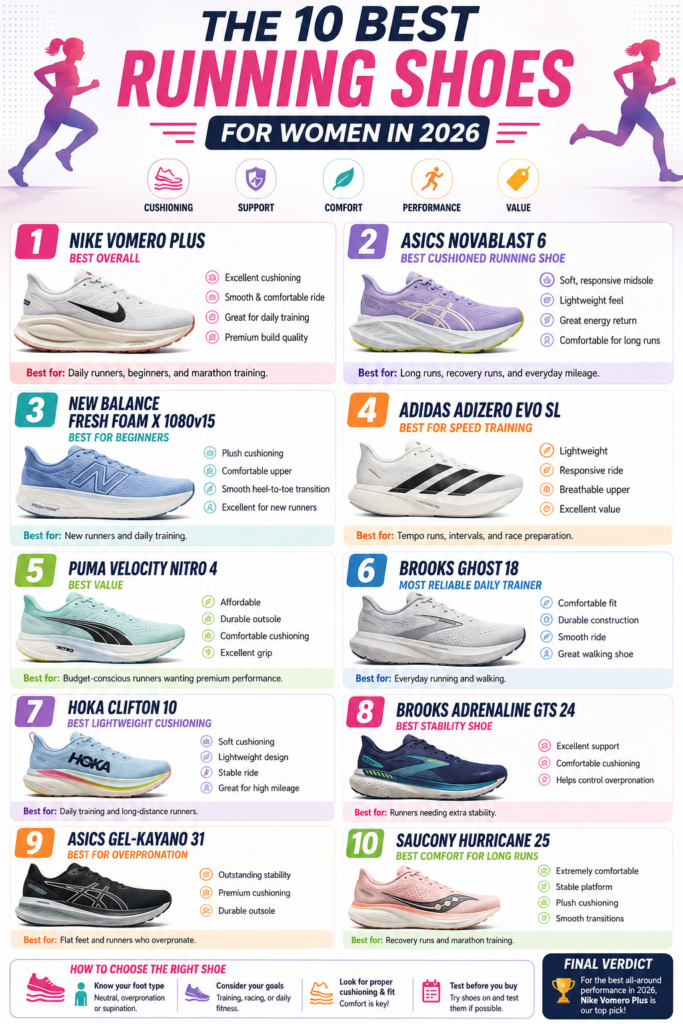
1. ASICS Gel Nimbus 27
Overview: The Gel Nimbus 27 is ASICS’s flagship max cushioned daily trainer, built for runners who want serious cushioning without much fuss about speed.
Key Features:
- FF BLAST™ PLUS ECO midsole foam with a rearfoot PureGEL™ insert
- 41.5mm heel / 33.5mm forefoot stack height, 8mm drop
- Jacquard mesh upper for breathability
- Available in narrow and wide width options
Best For: Runners with plantar fasciitis, high arches, or anyone prioritizing comfortable running shoes over speed.
Why We Recommend It: Between the deep stack of foam and the gel heel insert, this is one of the most protective daily trainers available, and it consistently ranks among the best women’s athletic shoes for high mileage comfort.
2. Brooks Ghost 17
Overview: The Ghost line has been a go to daily trainer for years, and version 17 keeps that reputation with a lower, more modern 10mm drop.
Key Features:
- DNA Loft v3 nitrogen infused midsole foam
- 36mm heel / 26mm forefoot stack height
- Double jacquard engineered mesh upper
- Available in narrow through extra wide widths
Best For: Beginners and anyone wanting one dependable, do it all daily trainer.
Why We Recommend It: It’s predictable in the best way a comfortable, balanced ride that works across easy runs, long runs, and moderate paced efforts, making it one of the safest picks among the best running shoes for beginners.
3. HOKA Clifton 10
Overview: The Clifton 10 took a maximalist leap this year, with a much higher stack than previous versions while staying surprisingly lightweight.
Key Features:
- 38mm heel / 30mm forefoot stack height (women’s), 8mm drop
- Compression molded EVA midsole with a wide, stable platform
- Jacquard knit upper
- Meta Rocker geometry for smooth heel to toe transitions
Best For: Runners with flat feet or mild overpronation who want stability without a stiff, corrective feel.
Why We Recommend It: The wider base gives a naturally stable platform, and the increased cushioning makes it one of the better cushioned running shoes for women who spend long hours on their feet, not just running.
4. Nike Pegasus 42
Overview: Nike’s long running workhorse trainer gets a full length Air Zoom unit this year, aiming for a more propulsive ride.
Key Features:
- ReactX foam midsole with full length encased Air Zoom unit
- 37mm heel / 27mm forefoot stack height, 10mm drop
- Updated, roomier toe box
- Durable rubber outsole
Best For: Runners who want one versatile shoe that handles everything from beginner mileage to marathon training blocks.
Why We Recommend It: It’s not the softest or the boldest shoe on this list, but its reliability and durability make it one of the most trusted best jogging shoes for women across experience levels.
5. New Balance Fresh Foam X 1080v15
Overview: New Balance replaced the aging Fresh Foam compound with a new supercritical Infinion foam this year, making the 1080 lighter and more energetic than any previous version.
Key Features:
- Infinion supercritical midsole foam
- 6mm drop, roughly 37mm heel stack height
- Contoured, double layer engineered mesh upper
- Noticeably lighter than the outgoing v14
Best For: Long distance runners and marathon trainers who want plush protection without a heavy, sluggish ride.
Why We Recommend It: The jump to supercritical foam is a real upgrade in energy return, making this one of the strongest best running shoes for marathon training in the premium cushioned category this year.
6. Saucony Ride 18
Overview: The Ride 18 trims weight compared to its predecessor while keeping the springy PWRRUN+ foam that’s made this line a reliable value pick.
Key Features:
- PWRRUN+ foam midsole
- ~35mm heel stack height, roughly 8mm drop
- Engineered mesh upper with improved midfoot wrap
- Noticeably lighter than the Ride 17
Best For: Budget conscious runners who still want a bouncy, dependable daily trainer.
Why We Recommend It: It offers a genuinely springy ride at a price point that undercuts several competitors, making it one of the better best budget running shoes for women without a real compromise in comfort.
7. On Cloudsurfer 2
Overview: On’s Cloudsurfer 2 leans into a lighter, more cushioned take on the brand’s signature CloudTec design, aimed at everyday road miles.
Key Features:
- Helion superfoam paired with CloudTec cushioning pods
- Lower stack height than max cushion rivals (roughly 32mm heel / 23mm forefoot)
- Lightweight, breathable engineered upper
- Speedboard plate for a smoother toe off
Best For: Runners who want cushioned comfort in a lighter, more nimble package than typical max stack shoes.
Why We Recommend It: It threads the needle between plush and lightweight running shoes for women, giving a soft landing without the bulk of some competitors on this list.
8. Adidas Supernova Rise 2
Overview: Adidas brought its Dreamstrike+ supercritical foam down into the Supernova Rise line, paired with EVA support rods for a more stable, structured ride.
Key Features:
- Dreamstrike+ supercritical midsole foam
- Built in EVA support rods for light stability
- 8mm drop, moderate to high stack height
- Breathable engineered mesh upper
Best For: Runners who want a bit of underfoot guidance and structure without a true motion control stability shoe.
Why We Recommend It: The supercritical foam gives it noticeably more energy return than older EVA based trainers, while the support rods add a reassuring sense of stability for runners who slightly overpronate.
9. Mizuno Wave Rider 29
Overview: After nearly three decades of updates, the Wave Rider 29 finally lowers its drop to 10mm and switches to a softer, nitrogen infused ENERZY NXT foam.
Key Features:
- Nitrogen infused ENERZY NXT midsole foam
- Mizuno’s signature Wave plate for smooth transitions
- 10mm drop (down from previous versions)
- Lighter build than the Wave Rider 28
Best For: Neutral runners logging consistent weekly mileage who want a dependable, no frills daily trainer.
Why We Recommend It: The softer foam and reduced weight modernize a long running favorite, making it a strong option among best running shoes for daily training for runners who’ve stuck with Mizuno over the years.
10. Altra Torin 9
Overview: True to Altra’s philosophy, the Torin 9 keeps a zero drop platform and a foot shaped toe box, wrapped in a maximalist cushioned midsole.
Key Features:
- Zero drop Balanced Cushioning platform
- FootShape™ toe box for natural toe splay
- High stack height for a maximalist cushioned feel
- FootPod™ outsole technology for adaptive flex
Best For: Runners with wide feet, those working on a more natural forefoot strike gait, or anyone transitioning toward minimalist mechanics without giving up cushioning.
Why We Recommend It: The wide, foot shaped toe box makes it one of the better best running shoes for wide feet women on the market, and the zero drop platform appeals to runners actively adjusting their stride mechanics.
Conclusion
If you only take one thing from this guide: the best running shoes for women aren’t a single pair they’re whichever pair matches your foot type, your mileage, and how your body responds to cushioning and drop. For most runners starting out, the Brooks Ghost 17 or Nike Pegasus 42 are safe, versatile choices. If you’re managing plantar fasciitis or need serious cushioning, the ASICS Gel Nimbus 27 is worth the investment. Training for a marathon? The New Balance 1080v15 is built for exactly that kind of mileage.
Ready to find your pair? Compare a couple of these options in person if you can trying them on and jogging a few steps in store tells you more than any spec sheet ever will.
What About Trail Running?
Everything above is built for pavement. If your training regularly takes you onto dirt, gravel, or technical singletrack, don’t force a road shoe to do that job best trail running shoes for women typically have deeper, more aggressive lugs and a more protective, rock guarded build. Internal link opportunity: Check out our guide to the best trail running shoes for women for off road specific picks.
Frequently Asked Questions
What are the best running shoes for women with flat feet?
Shoes with a wider platform and some built in structure tend to work best for flat feet, since they offer a more stable base without forcing a corrective, overly stiff ride. The HOKA Clifton 10 is a common pick for this reason, thanks to its wide midsole base.
What running shoes are best for plantar fasciitis?
Look for a firm, supportive midsole and a structured heel counter rather than just maximum softness. Shoes like the ASICS Gel Nimbus 27 are frequently recommended, though persistent plantar fasciitis pain is worth discussing with a podiatrist or physical therapist.
How do I know if I have high arches, flat feet, or a neutral arch?
A simple wet foot test (stepping on a dark surface after wetting your foot and observing the imprint) can give a rough idea, but a specialty running store’s gait analysis or a podiatrist’s assessment is more reliable if you’re chasing a specific fit.
What’s the difference between neutral and stability running shoes?
Neutral running shoes let your foot move through its natural range of motion without correction. Stability running shoes add features like support rods or firmer foam on the inner midsole to reduce excessive inward rolling of the foot (overpronation).
How often should I replace my running shoes?
Most running shoes last between 300 and 500 miles, depending on your weight, running style, and surfaces. Visible tread wear, midsole compression, or new aches during runs are signs it’s time for a new pair.
Are cushioned running shoes better for long distance?
Generally, yes more cushioning helps absorb impact over higher mileage, which is why max cushion shoes like the New Balance 1080v15 and ASICS Gel Nimbus 27 are popular for marathon training. That said, personal preference and gait still matter more than stack height alone.
What running shoes are best for beginners?
Beginners typically do well with a moderately cushioned, neutral daily trainer that isn’t too specialized the Brooks Ghost 17 and Nike Pegasus 42 are both solid, forgiving starting points.
Do I need different shoes for road running versus trail running?
Yes. Road running shoes are built for smooth, hard surfaces, while trail running shoes have deeper lugs and more protective uppers for uneven, technical terrain. Using a road shoe on technical trails increases your risk of slipping or ankle injury.
What’s the best running shoe for wide feet?
Look for shoes offered in explicit wide or extra wide sizing, or foot shaped designs like the Altra Torin 9, which prioritizes forefoot room over a tapered, traditional toe box.
Is a zero drop shoe better than a traditional running shoe?
Neither is universally better it depends on your gait and running history. Zero drop shoes like the Altra Torin 9 suit runners with a midfoot or forefoot strike, or those actively working on their form, but switching from a high drop shoe should be done gradually to avoid overloading your calves and Achilles tendon.




Add comment