
 Meghan Bender
introduction
If you’ve ever skipped SPF because every sunscreen for oily skin you’ve tried left you looking like a glazed donut by lunchtime, you’re not alone. Oily and acne prone skin types often avoid daily sun protection because the wrong formula can clog pores, trigger breakouts, and add unwanted shine on top of shine.
The good news? The best sunscreen for oily skin doesn’t have to feel heavy, greasy, or pore clogging. With the right formula, you can get full broad spectrum protection in a lightweight sunscreen for oily skin that controls oil instead of adding to it.
In this guide, we’ll break down exactly what to look for in a sunscreen for oily skin, review the top picks across mineral, tinted, and Korean formulas, and answer the most common questions about choosing sunscreen face for oily skin types.
Key Takeaways
- Look for sunscreen labeled “oil free” and “non comedogenic” to avoid clogged pores.
- A lightweight sunscreen for oily skin in lotion, gel, or fluid form absorbs faster than heavy creams.
- Mineral sunscreen for oily skin (zinc oxide or titanium dioxide) is gentler for acne prone or sensitive complexions.
- Tinted formulas can replace part of your makeup routine while controlling shine.
- Daily, consistent use matters more than chasing the highest SPF number.
For a full daily lineup, pair your sunscreen pick with our [oily skin skincare routine guide] to build a complete, breakout resistant regimen.
What Makes the Best Sunscreen for Oily Skin?
Oily skin produces excess sebum, which means pores are already more prone to becoming blocked. Heavy, occlusive sunscreens make that problem worse. The best sunscreen for oily skin is formulated to deliver protection without adding extra oil to the mix.
Here’s what separates a genuinely good sunscreen for oily skin from one that will leave you blotting your face by noon.
Non Comedogenic Formulas Matter Most
Always check the label for “non comedogenic.” This means the formula has been designed to avoid pore clogging ingredients, which lowers your risk of breakouts. This single word does more to predict how your skin will react than any other claim on the bottle.
Choose a Lightweight Sunscreen for Oily Skin
A lightweight sunscreen for oily skin think fluids, gels, or thin lotions rather than thick creams absorbs faster and sits better under makeup. If your current sunscreen feels heavy within minutes of application, the texture is probably the issue, not the SPF level.
Matte or Oil Absorbing Finish
Many of the best SPF sunscreen for oily skin formulas include silica, perlite, or other oil absorbing particles. These ingredients soak up excess sebum throughout the day, which helps control shine without compromising sun protection.
Mineral vs. Chemical: Which Works Better for Oily Skin?
Both mineral and chemical filters can work well for oily skin, but they behave differently.
- Mineral sunscreen for oily skin (using zinc oxide or titanium dioxide) sits on top of the skin and physically deflects UV rays. It tends to be gentler and less likely to irritate acne prone skin, though some formulas can leave a slight cast.
- Chemical sunscreen absorbs into the skin and converts UV rays into heat. These formulas are often thinner and more cosmetically elegant, but can occasionally feel warm on application.
A zinc oxide sunscreen for oily skin is generally the safer starting point if you have reactive or breakout prone skin, since zinc oxide has natural anti inflammatory properties.
How We Chose These Sunscreens
To build this list of the best facial sunscreen for oily skin, we prioritized formulas that are explicitly labeled oil free and non comedogenic, have a track record of dermatologist recommendation, and represent a range of finishes (matte, tinted, mineral, and lightweight fluid) so there’s an option for every preference and budget.
We also cross referenced ingredient lists against common pore clogging offenders (heavy oils, certain silicones, and coconut derived ingredients) to keep this list genuinely suited to oily and acne prone skin not just labeled that way for marketing purposes.
The 7 Best Sunscreens for Oily Skin
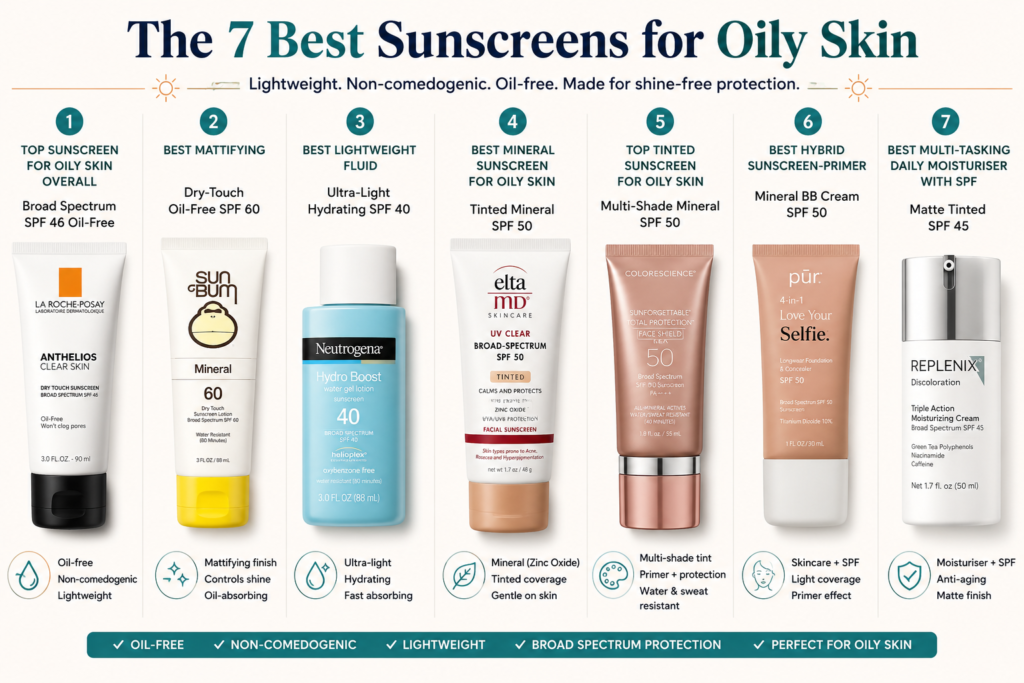
1. Best Overall Sunscreen for Oily Skin: Oil Free Broad Spectrum SPF 46
This is widely considered the gold standard sunscreen for oily acne prone skin. It’s formulated without oil, fragrance, or common pore clogging agents, and many dermatologists recommend it specifically for breakout prone complexions.
Why it works: The lightweight, almost weightless texture absorbs in seconds, making it an easy everyday sunscreen for oily skin you’ll actually want to reapply.
2. Best Mattifying Pick: Dry Touch Oil Free SPF 60
If shine control is your top priority, a dry touch formula like this one sets to a true matte finish. It’s designed with an anti shine complex that actively absorbs oil throughout the day rather than just sitting on top of it.
Why it works: This is one of the few sunscreen lotion for oily skin options that genuinely reduces midday shine instead of masking it temporarily.
3. Best Lightweight Fluid: Ultra Light Hydrating SPF 40
For those who want a sunscreen face for oily skin that feels closer to water than lotion, an ultra light fluid formula offers fast absorption and a refreshing finish without compromising on broad spectrum coverage.
Why it works: It layers well under makeup and won’t pill when combined with other skincare steps, making it ideal as part of a multi step routine.
4. Best Mineral Sunscreen for Oily Skin: Tinted Mineral SPF 50
A tinted mineral sunscreen for oily skin gives you UV protection plus light, buildable coverage. Formulated with zinc oxide and titanium dioxide, it blocks both UVA and UVB rays while evening out skin tone.
Why it works: This is a strong pick if you want to skip a separate foundation step. The plankton extract and antioxidant additions in some formulas also help defend against environmental stress.
5. Best Tinted Sunscreen for Oily Skin: Multi Shade Mineral SPF 50
Among the best tinted sunscreen for oily skin options, multi shade mineral formulas stand out because they come in a genuine shade range rather than a single universal tint. This makes it easier to find a true match and avoid the dreaded white cast.
Why it works: It doubles as a lightweight primer, so you can wear it alone or under makeup, and it’s formulated to resist water and sweat for up to 40 minutes.
6. Best Hybrid Sunscreen Primer: Mineral BB Cream SPF 50
If you want skincare, sun protection, and light coverage in one step, a mineral BB cream functions as both a sunscreen cream for oily skin and a makeup primer. It’s available in multiple shades and is formulated to be safe for sensitive and acne prone skin.
Why it works: This option simplifies your morning routine without skipping SPF ideal for busy mornings when a full multi step routine isn’t realistic.
7. Best Multi Tasking Daily Moisturizer with SPF: Matte Tinted SPF 45
This option works as an anti aging moisturizer, color corrector, and sunscreen for oily skin all in one. It sets to a matte, pore minimizing finish and includes a universal tint that blends across most skin tones.
Why it works: For people who want to streamline their routine without sacrificing results, this multi functional formula checks several boxes at once.
For more on layering these products correctly, check out our [step by step oily skin morning routine] for the full application order.
Best Korean Sunscreen for Oily Skin
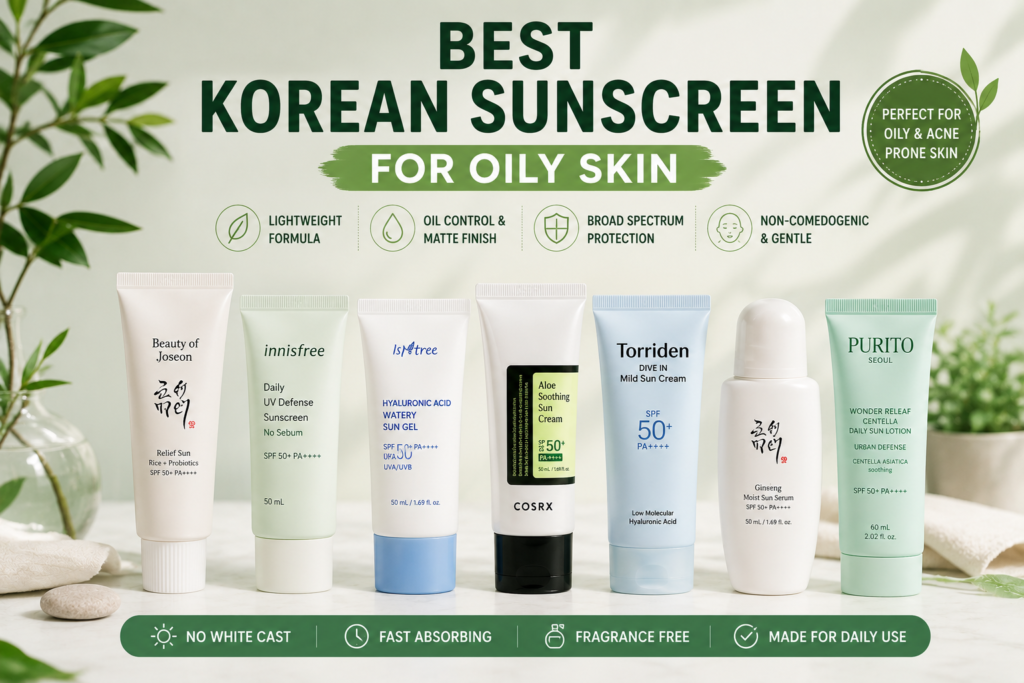
Korean skincare has become a go to category for anyone hunting the best sunscreen for oily skin Korean formulas can offer. K beauty sunscreens are known for their nearly weightless, water like textures and fast absorption a direct response to the humid climate many of these brands are formulated in.
When shopping for the best Korean sunscreen for oily skin, look for terms like “essence,” “fluid,” or “watery” on the label, which typically signal a thinner, faster absorbing texture than traditional Western lotions. Many Korean formulas also combine UV filters with skin soothing ingredients like centella asiatica or niacinamide, which can help calm inflammation associated with acne prone skin.
Because Korean sunscreens are often formulated with newer generation UV filters, they tend to avoid the white cast and heavy feel associated with older mineral formulas a major advantage if you’re specifically looking for a light sunscreen for oily skin that disappears on application.
Sunscreen for Oily Acne Prone Skin: Special Considerations
If your skin is both oily and acne prone, your sunscreen needs to do double duty: protect from UV damage without feeding active breakouts. A few extra considerations apply.
Avoid Heavy Oils and Comedogenic Silicones
Even formulas labeled “for oily skin” can sometimes include ingredients that are problematic for acne prone complexions specifically. Scan ingredient lists for coconut oil, isopropyl myristate, and certain heavy silicones if you’re prone to breakouts.
Fragrance Free Is Often Gentler
Fragrance is one of the most common irritants for sensitive, acne prone skin. Choosing a fragrance free sunscreen for oily acne prone skin reduces your risk of irritation, even if the formula is otherwise non comedogenic.
Patch Test New Formulas
Before committing to a full face application, patch test any new best sunscreen for oily skin pick along your jawline for a few days. This is especially important if you’re also using actives like retinoids or exfoliating acids, which can increase sensitivity.
According to the American Academy of Dermatology, choosing a broad spectrum, water resistant sunscreen with SPF 30 or higher is one of the most effective ways to reduce skin cancer risk and premature aging, regardless of your skin type.
Understanding SPF and UV Protection Basics
Choosing the best SPF sunscreen for oily skin isn’t only about texture the protection level matters too.
SPF (Sun Protection Factor) measures how well a sunscreen protects against UVB rays, the type primarily responsible for sunburn. An SPF 30 sunscreen blocks about 97% of UVB rays, while SPF 50 blocks roughly 98%. No sunscreen blocks 100% of UV rays, which is why reapplication and consistency matter more than chasing an ever higher number.
UVA rays, on the other hand, penetrate deeper into the skin and are linked to premature aging and long term sun damage. Always look for “broad spectrum” on the label, which confirms protection against both UVA and UVB rays.
The U.S. Food and Drug Administration recommends reapplying sunscreen at least every two hours, and more frequently if you’re sweating or swimming a rule that applies no matter how lightweight your formula is.
How to Apply Sunscreen on Oily Skin for Best Results
Even the best facial sunscreen for oily skin won’t perform well if it’s applied incorrectly. A few application tips can make a real difference.
- Apply after moisturizer, before makeup. Let your sunscreen for oily skin set for a minute or two before layering anything on top.
- Use enough product. Most people apply far less than the recommended amount aim for roughly a quarter teaspoon for the face alone.
- Reapply over makeup with a tinted formula or powder. A mineral sunscreen for oily skin in powder or stick form makes midday reapplication far easier without disturbing makeup.
- Don’t skip cloudy or indoor days. UV rays pass through clouds and windows, so daily sunscreen for oily skin use should be non negotiable, even when you’re not heading outside.
For a deeper breakdown of layering order, see our [complete guide to skincare layering for oily skin].
Conclusion
The best sunscreen for oily skin is one you’ll actually wear every single day which means texture and finish matter just as much as SPF level. Whether you prefer a mineral sunscreen for oily skin, a tinted hybrid, or an ultra light Korean formula, the goal is the same: consistent, broad spectrum protection that works with your skin instead of against it.
Start with a lightweight, non comedogenic option from this list, patch test it, and give your skin a few weeks to adjust. Once you find your match, daily SPF stops feeling like a chore and becomes one of the simplest, most effective steps in your entire routine.
Browse our full [sunscreen for oily skin collection] to compare textures, finishes, and price points side by side.
Frequently Asked Questions
What is the best sunscreen for oily skin?
The best sunscreen for oily skin is typically a lightweight, oil free, non comedogenic formula labeled broad spectrum SPF 30 or higher. Gel, fluid, or matte lotion textures tend to perform better on oily skin than thick creams, since they absorb faster and won’t add extra shine.
Is mineral or chemical sunscreen better for oily acne prone skin?
Both can work well, but a mineral sunscreen for oily skin (formulated with zinc oxide or titanium dioxide) is often gentler and less likely to irritate active breakouts. Chemical sunscreens tend to have a thinner, more cosmetically elegant feel but may cause sensitivity in some people with reactive skin.
Can sunscreen cause breakouts on oily skin?
Sunscreen itself doesn’t inherently cause breakouts, but formulas containing heavy oils, certain silicones, or comedogenic ingredients can clog pores. Choosing a sunscreen labeled “non comedogenic” and “oil free” significantly reduces this risk for sunscreen for oily acne prone skin.
What SPF should I use for oily skin?
Dermatologists generally recommend a minimum of SPF 30 for daily use, though many people with oily or sun sensitive skin opt for SPF 45–50 for added protection. The best SPF sunscreen for oily skin is the one with adequate coverage that you’ll actually reapply throughout the day.
Do I need a separate sunscreen for my face if I have oily skin?
Yes facial skin is thinner, more exposed, and more prone to visible breakouts than body skin, so a dedicated sunscreen face for oily skin formula (rather than a body sunscreen) is usually a better fit. Facial formulas are typically lighter, less likely to clog pores, and often include skin supporting ingredients like niacinamide or antioxidants.
Are Korean sunscreens good for oily skin?
Yes, many of the best Korean sunscreen for oily skin options are specifically formulated to be lightweight and fast absorbing, which makes them popular for oily and combination skin types. Korean formulas often combine modern UV filters with soothing ingredients, resulting in a light sunscreen for oily skin that layers well under makeup.
How often should I reapply sunscreen if I have oily skin?
Sunscreen should be reapplied at least every two hours when outdoors, and more often if you’re sweating or swimming. For oily skin, a tinted powder sunscreen or a light sunscreen for oily skin in spray form can make midday reapplication easier without disrupting makeup.





Add comment